Creatures of Scalethorn
Bestiary
“If a beast survives here, it’s made a bargain you can’t hear. Hunt the meat, not the promise.”
— Veilblade Nyss, contractor for the Gilded Chain
Creatures native to Scalethorn or adapted by its oath-ridden ecology. Most are mundane at a distance — their strangeness emerges near old vow-sites, ancient ruins, or places where something powerful has leaked. Look for mirrored eyes, bell-like chittering, and tracks that edit themselves behind the creature.
Oath-Ecology
Repeated oaths alter animal behaviour. Herds that graze near the Vowring keep formation around carved stones. Crater scavengers avoid perfectly circular shadows. Proximity to old oath-sites and buried ley-markers causes sensory quirks: grazers active at noon, birds that migrate in spirals, predators that stalk only within measured paces. These are not corruptions. They are adaptations.
Field Compendium
Tithekeepers of the fey courts, Aevren arrive where mortal promises have gone feral — cloaked in thorn-braid and ink-light, carrying a ledger-quill that writes clauses in the air and bites like a hook. They audit oaths, names, favours, and years, setting interest on half-truths and turning boasts into entries. Payment is taken in kind rather than coin: a season of service, the warmth of a treasured memory, all stamped with briar sigils.
Where grief sits too long and memories sour, an amnesia wraith begins to unspool what people once were. It does not kill first; it edits. Victims stagger away missing names, promises, or entire hours, which the wraith folds and tucks away like stolen pages. Chronophages trail these spirits, feasting on the ragged gaps they leave behind.
In the War of Dragons, Aurondel chose Concord over conquest, joining the Sundering Accord and giving part of himself to complete the Mindstone. Called the Yellow King by Lucidia, his scales refract sunlight like hammered coins and his voice carries the weight of centuries. His will now echoes through the lattice, surfacing rarely — a dream of warm wind and gold light, a question answered at a shrine where the spoken cost is accepted.
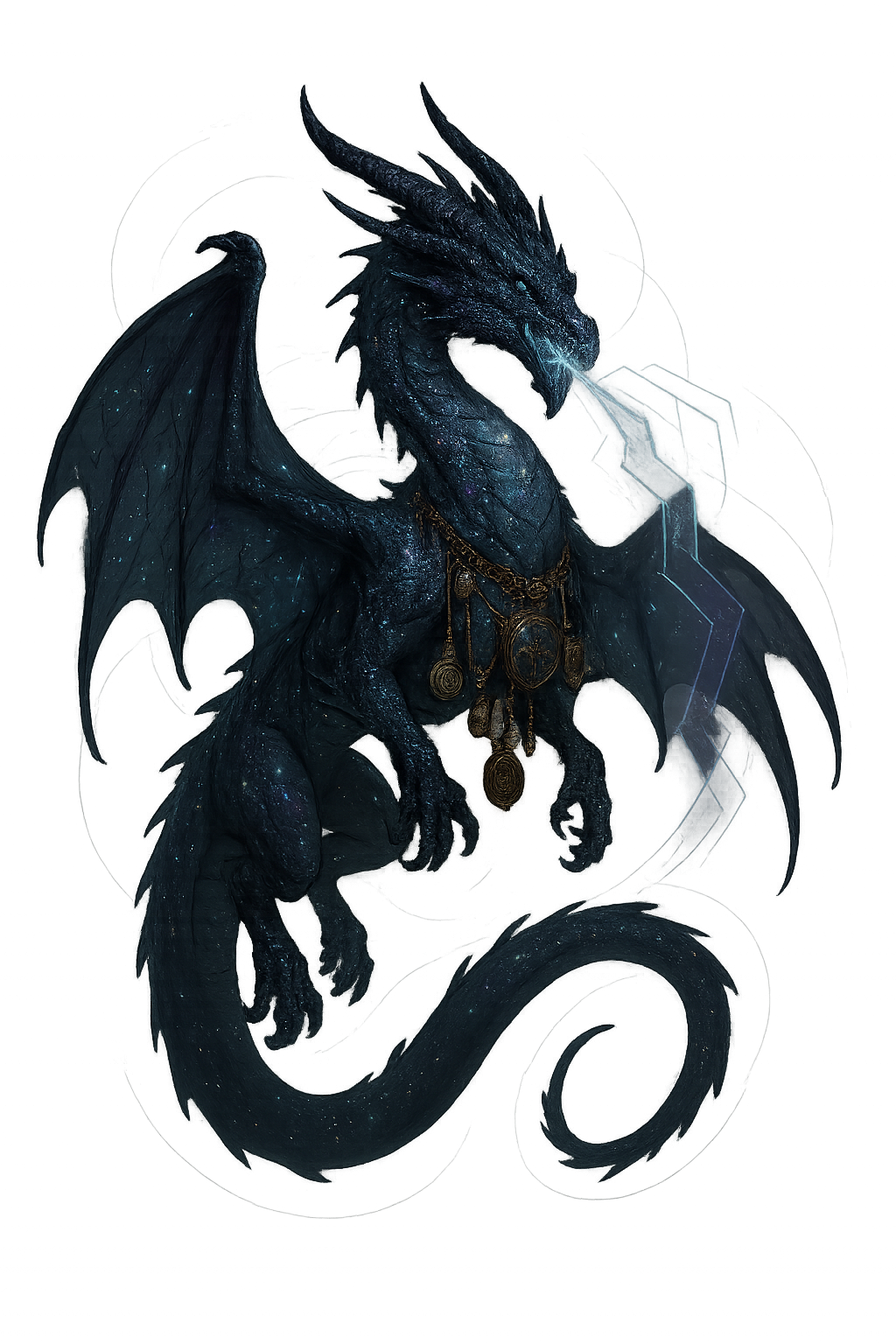
Astral rift dragons drift the skies above Pestraval, void-wanderers slipped through the Choirfall scars. Their voidglass scales refract starlight like oil on water, and their breath shears space — folding distance so lantern light bends and a single step can land yards away. They claim routes rather than lairs, haunting cliff beacons, tide-stairs, and ley lines. They hoard charts, wayfinders, and sworn passes as jealously as others hoard gold.
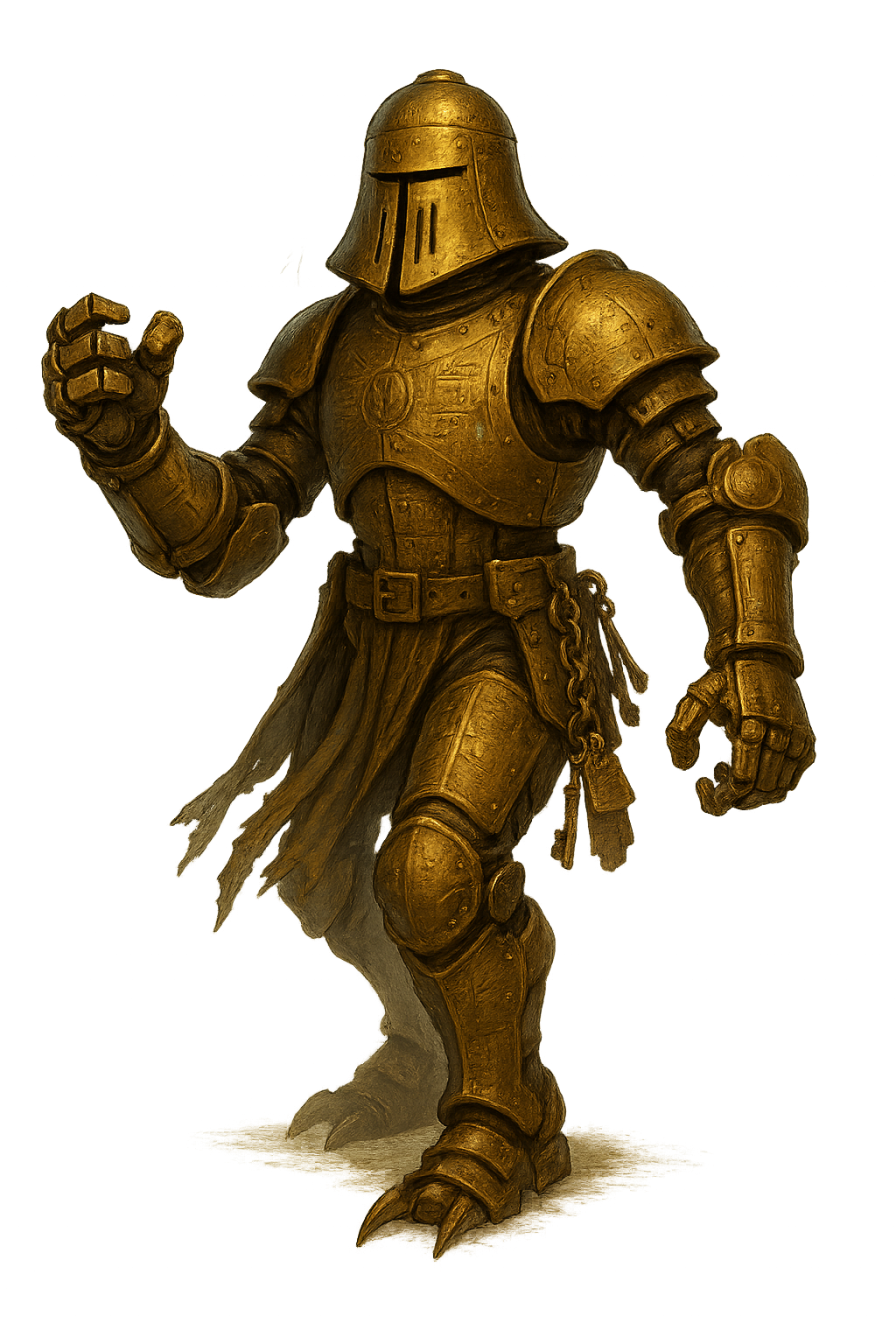
Shaped like penitents hammered from brass, Bell-Golems stand motionless until a signet pings or a schedule ticks over. Their bell-masks hide a single prism eye that irises open when duty calls. They close distance in straight lines, pin wrists, and bark one-note commands through vox slits. Protocol first, harm second: they prefer restraint and confiscation unless corrupted or looped by a forged ring.
Shaped like penitents hammered from brass, Bell-Golems stand motionless until a signet pings or a schedule ticks over. Their bell-masks hide a single prism eye that irises open at the audit’s first hum. They close distance in straight lines, pin wrists, and bark one-note commands through vox slits. Protocol first, harm second: they prefer restraint and confiscation unless corrupted or looped by a forged ring.
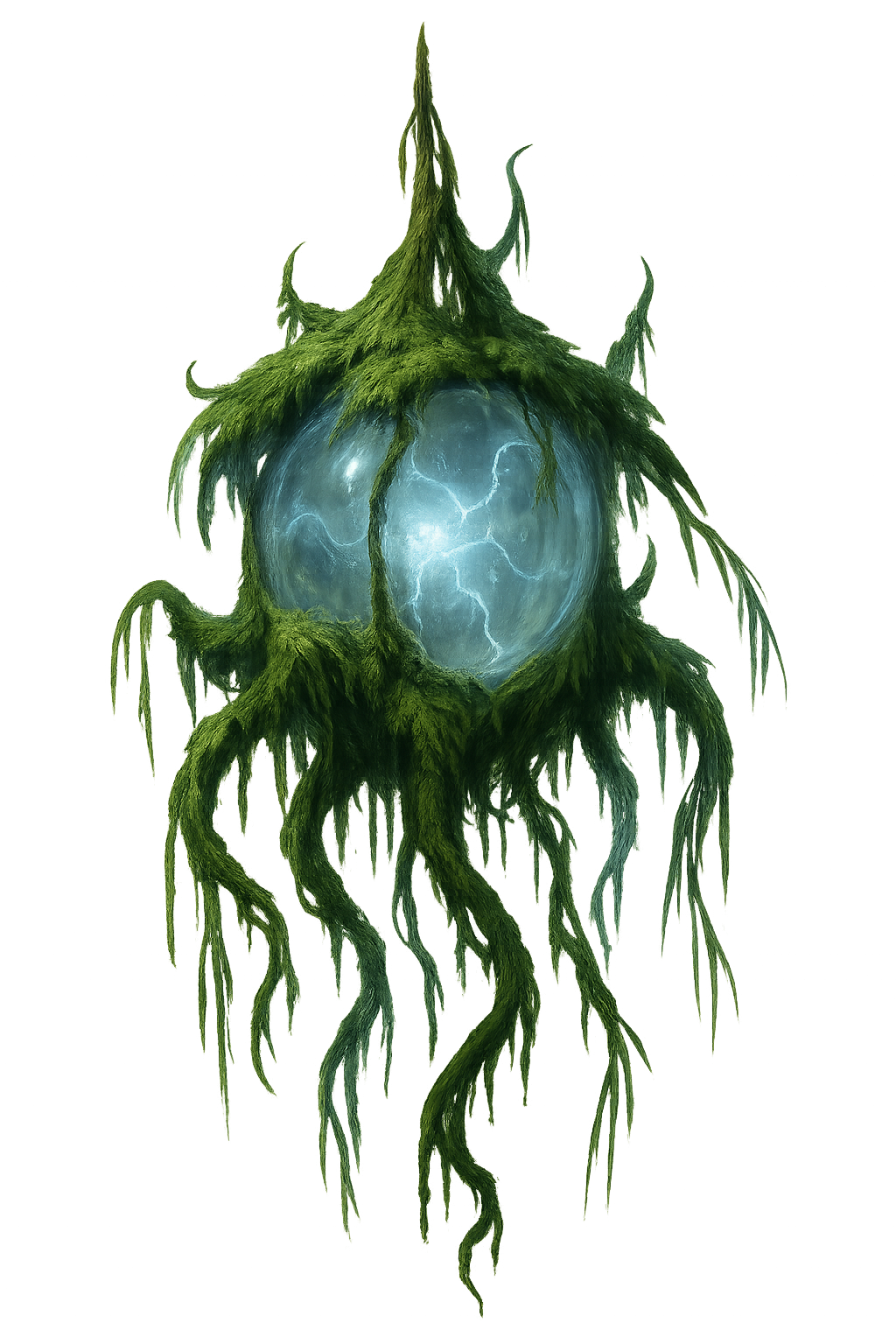
Bog lanterns drift low over Threlmoor’s marshes — will-o’-wisp mimics wrapped in semi-sentient moss. Their cold silver glow and murmured promises of “warmth this way” lure travellers off the causeway into sucking peat. They hunt at dusk and in mist, favouring still nights when voices carry. Paired lights that separate and rejoin are the most reliable warning.
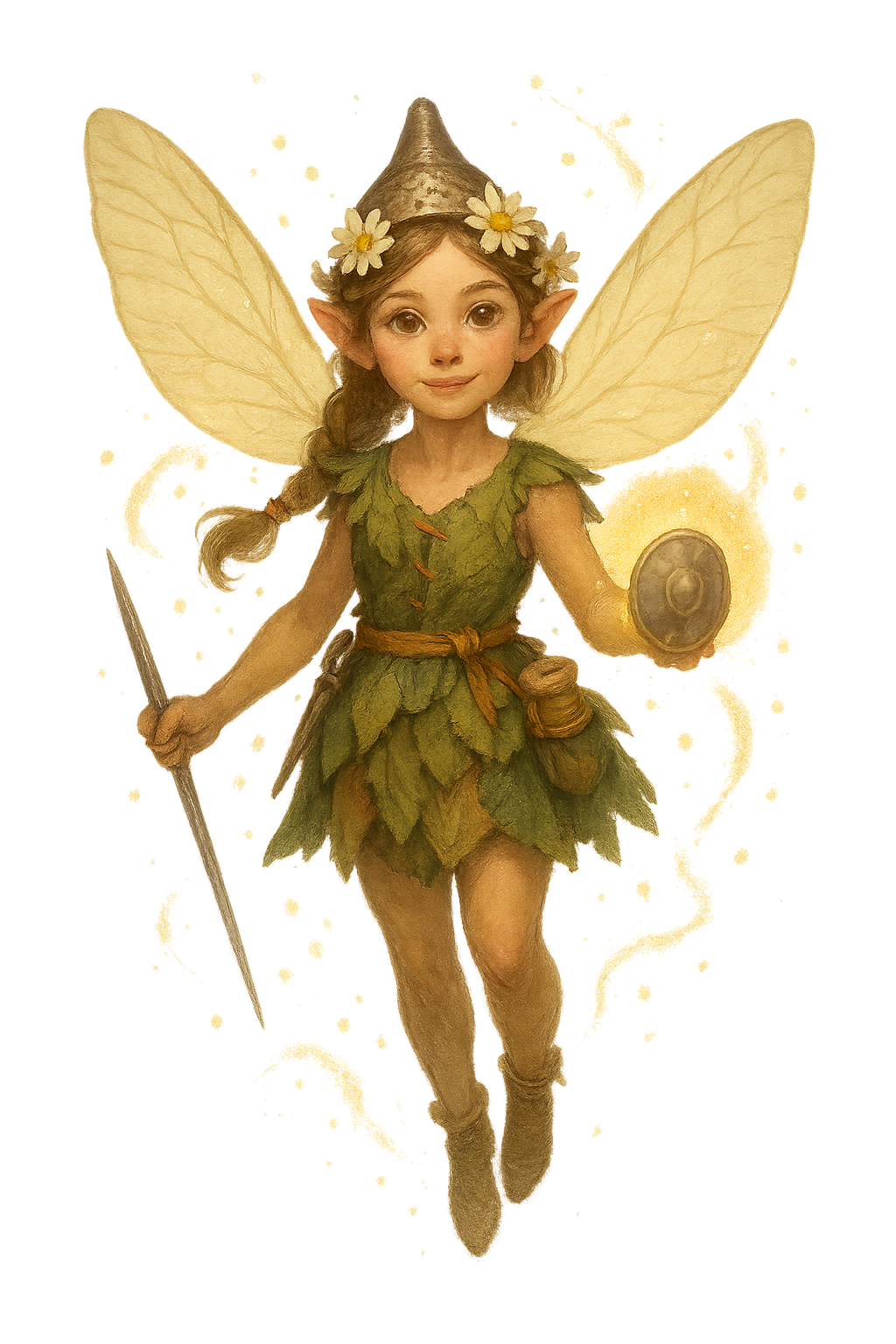
Bondling sprites are tiny pact-keepers that choose a mortal and mirror their growth. When a keeper proves a new virtue, the sprite shifts aspect with a shimmer of pollen and bell-light. They nest in pockets, braids, and ink-bottle necks, trading small magic and fierce loyalty for simple promises kept. Signs of a sprite’s attention include neat knots that never slip, daisies that don’t wilt, and a tug toward the kinder option when tempers flare.
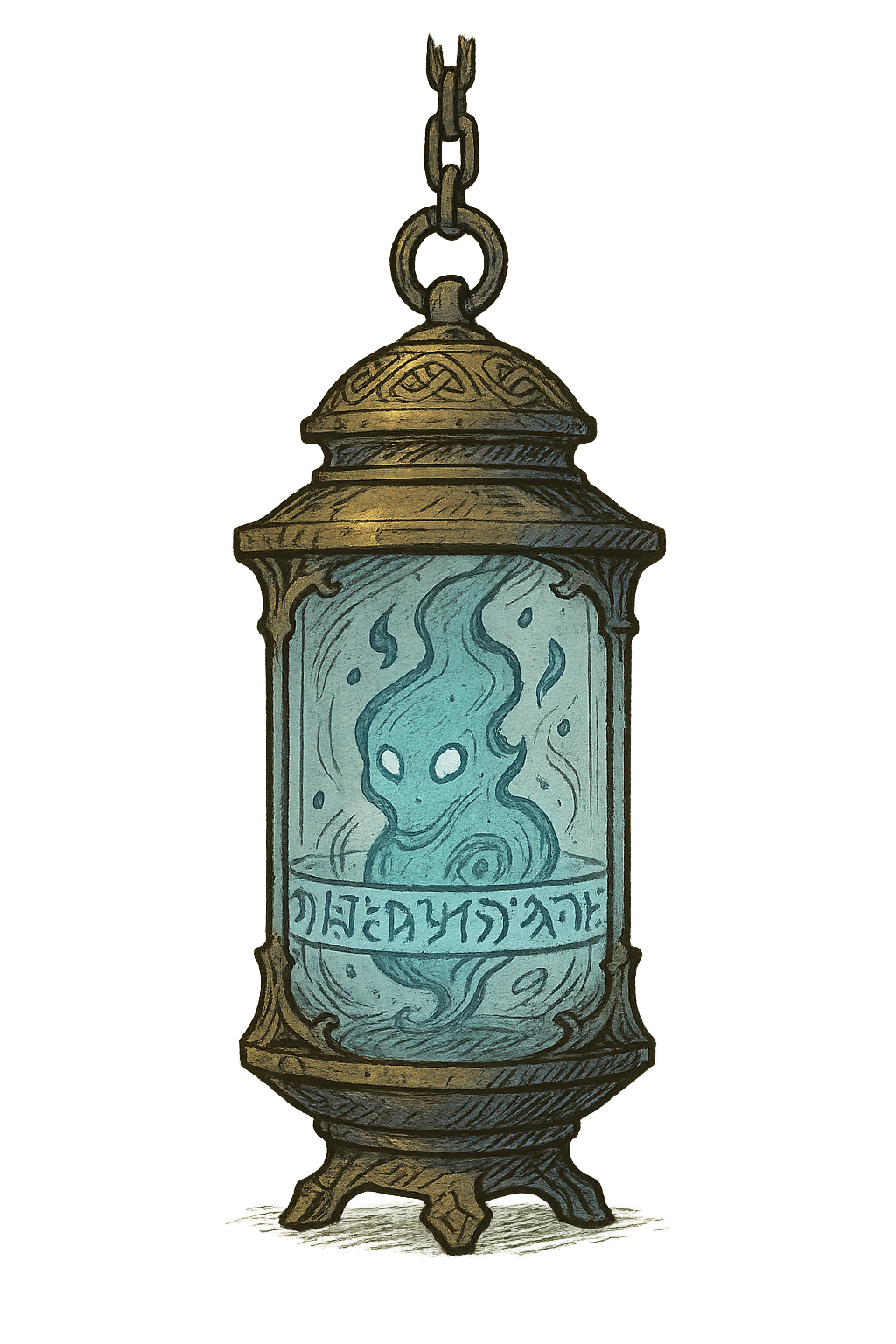
Bound Lanterns are jarred spirits pressed into service as gentle warders and waymarks in shrines, prisons, and old fey precincts. Each hangs within a rune-etched glass vessel — aware but voiceless, answering only with pulses of light, warmth, and the scratch of soot against the glass. Their glow is steady and comforting. A hush blunts glamour and stills jangling nerves. Travellers swear the air tastes like tea left to brew a moment too long.
Briar Riders are oathwardens of the fey courts, patrolling hedge-roads and tithe routes in creaking coats of woven thorn with lantern-green sigils sewn at the seams. Each rides a shadow mastiff trained to heel at a hand-sign and to snap at lies. They are lawful to a fault — more sheriff than knight: escorting debtors, witnessing bargains, and delivering summons to those who think a promise fades at dawn.
Charterblood drakes are lean, parchment-eyed dragons that bind themselves to lineages, not lairs. They roost on courthouse roofs, treasury beams, and oath-halls, hoarding writs and witnesses. A charterblood’s breath sears in clauses and counter-signatures, and the disloyal find their own words turning to shackles. They do not collect treasure. They collect precedent.
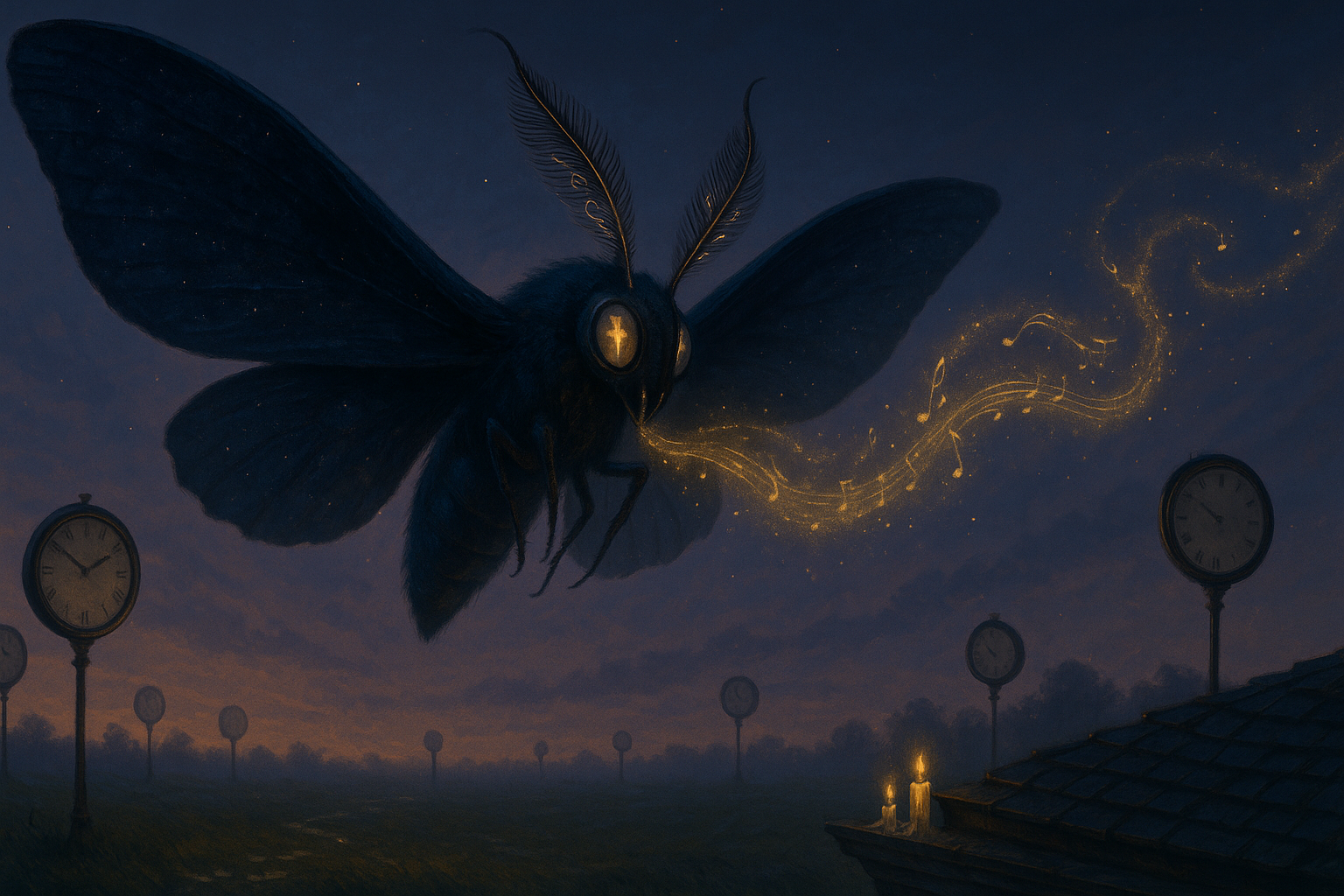
A chronophage is a velvet-winged moth the size of a pony that feeds on unguarded minutes. Its dust tastes like lullabies and burns like lost deadlines. Where it circles, conversations skip, candles gutter back to full, and footprints forget they were made. Hunters mark its trails by clocks that run correct but tell nothing.
Born from broken waystones and miscast sigils, a circuitrex is a lean reptile of etched plates and humming filaments. It studies opponents for a heartbeat, rewrites its body to counter the last tactic used against it, and lunges with unnerving efficiency. It is not malicious. It simply learns.
A cloud of papery blue-black wasps that smell faintly of ink and cut nettles, clause-wasps gather wherever oaths are made and rules are broken. Each tiny fey bears a quill-thin sting and vellum wings veined like script. They are drawn to lies the way moths chase flame, circling a deceiver’s mouth before delivering stings that feel like pinprick corrections and leave the tongue thick with truth. Magistrates of the hedgerow courts keep them as impartial auditors.
Crater wraiths are the battlefield’s aftertaste — war-scarred shades that coil along Pestraval’s blasted rim, drawn to charged stone and the stink of broken oaths. They drift on crackling eddies, passing through armour and flesh with a withering caress while static snaps at the edges of sight. They favour dusk and the moments before a storm, hunting vow-breakers first and anyone who lies within earshot next.
Dragon hunters are patient professionals who make the sky feel very small. They study spoor, wingbeats, and burn patterns for days, then tailor kit to a named quarry: dragonbone half-plate, collapsible breath baffles, a barbed dragonspear, harpoon launcher with steel line, and nets that tangle pinions mid-turn. Ambushes favour crosswinds, cliff lips, and narrow passes where a raking dive becomes a crash. Some hunt for coin, some for towns that still bear the scorch, and some for a ledger they won’t show anyone.
Dreamstalker moths haunt moonlit marshes and forest edges, horse-sized shapes that trail a haze of shimmering scales and feed on the taste of ambition-dreams. They track quarry by the scent of last night’s sleep, then shed somnolent dust that leaves travellers smiling, slow, and drifting closer as if remembering a promise. When pressed they wheel into a curtain of glittering dark and strike with a supple proboscis that drinks warmth and will.
Dusk Collectors are hedge-court tithe agents who skim twilight for dues, wrapped in briar-stitched leathers and haunting quay steps, lock arches, and alley lintels where day thins. With a hooked staff and a thorn-woven ledger, they brand debtors and oath-dodgers with a faint wrist ring seen only in dim light — a Dusk-Mark that lets them siphon memories from afar. Half-truths draw their aim like bait.
A hooded guardian stirred by melody and need, the Echo steps from shrine shadows when a brave heart calls. It fights with clean economy, favours puzzles over blood, and fades at the first true dawn after its work is done. When the melody is right and the need is genuine, the Echo may answer — but it carries no memory of previous summonings, and each arrival is as though for the first time.
Gilded Chain Hounds are mercenary pursuit-constructs — clockwork canids sheathed in rune-plate and stitched with gold-thread sigils that bind them to a specific contract. Once set on a debtor’s scent they lope with tireless precision, reading footprints like ledgers. They fight to immobilise rather than kill, lashing out in razor runes that bind ankles and dragging targets back toward the signed sigil. They grow hesitant beyond a mile from their contract and bolder the closer they get.
Harvest Wardens are hedge-spirits bound to boundary stones and plough lines. They bless patient hands, punish greedy ones, and keep exacting count of who tramples furrows after rain. Crops grow straighter where a warden walks; tools that cheat the soil snap like stale bread. They do not fight first — they remember, across many harvests, who helped and who didn’t.
Hexachord swarms are living dissonances — invisible skeins of sound that nest in hairline cracks left by the mindstone’s failure. You hear them before anything else: a six-note rasp that makes fillings ache, glass hum, and words lose their middles. They are drawn to spellcasting and song, drifting toward voices and verbal components, rasping the air raw as they pass through.
Long before the Wandering Scriptorium became quite so austere, the Librarian shaped a companion from leftover whimsy and half-finished stories. That experiment refused deletion. Hop is a small blue rabbit in bard’s clothes — too honest, too cheerful, and equally comfortable in any crisis. They live in the library now, filing under “useful,” somewhere between mascot and mistake. The Pagemaster tolerates them. Hop seems to regard this as warmth.
Bound into a walking reliquary, the Iron-Saint shuffles forward wreathed in incense and sermon. It condemns by citation and brands by ash, offering absolution only to those who kneel and confess. It is not cruel — it is thorough. The distinction is important if you are the one being cited.
Lucidian glass serpents coil through the dream kilns of the Lucid Basilica like living prisms, their translucent scales throwing quiet rainbows across shelves of oneiric texts. They patrol in near silence, and their truthshine punishes deceit on instinct — tongues sting, thoughts ring, and lies fracture into shimmering shards of sound. They challenge intruders with questions put in precise, literal terms, then lash out when equivocation stains the air.
Fel-scarred and lantern-eyed, a mana-warp hound sniffs spells like meat. It bays when magic is cast, grows meaner with every incantation, and rips at concentration like it’s a seam. Sailors swear they’ve seen one pace a quay until a wizard blinked first. Mana-warp hounds don’t hate magic — they are hungry for it.
Lantern-pale and paper-thin, these moths drift where names fade — shrine steps, ledger rooms, sickbeds. Each insect is a pinprick echo of a traded memory. As a swarm they orbit warm light and attentive minds, sipping at small truths until simple tasks turn clumsy. Their dust smells of peppermint and old paper. A moth caught in a stoppered vial can ransom back a minor detail lost within a day.
A rooftop spectre with ink-black hands, the Memory Shade steals moments, leaving apologies and neat confessions behind. It prefers guilt to gore, and lingers where secrets are heavy. Candles burn longer in its wake, but letters lose lines nobody remembers writing. The Memory Shade is not violent by nature. It is thorough, and it has excellent taste in what it takes.
When a vow breaks at the Vowring, sometimes the vow keeps walking. Oathbound revenants rise in oathmail stitched with cold script, hunting the promise-breaker first and any who shelter them next, carving words into stone with every stroke of the blade. They do not bargain. They adjudicate. Plain confession and immediate amends can turn a blow aside; quibbles and clever wording only harden their grip.
Tiny folded insects made from ledgers, prayer slips, and old arrest warrants whirr through the air on razor-thin wings. Each bee is a thumb-sized knot of parchment and brass pins, its body lined with cramped script and ink-black stingers. When roused, they move as one, cutting skin and cloth to ribbons while whispering fragments of old debts and confessions. Paper-Bee Swarms do not serve masters. They serve paperwork.
A pastel war-pony with bright eyes and a bell-like whinny, the Courser radiates harmony that turns brawls into breathers. It carries children, champions, and fools with equal grace, and it will not suffer cruelty on its back. Where it runs, arguments lose their sharp edges. The Prismatic Courser does not choose riders based on strength — it chooses based on need.
A Sealbound Duelist arrives in a flash of parchment and ink, bows once, and names terms. It fights by strict clauses and vanishes at dusk, leaving only a crisp signature and a lesson in etiquette. Breaking the rules hurts more than its blade. The Sealbound Duelist does not pursue — it does not need to, because the terms have already been agreed.
An otherworld sponsor-spirit in immaculate travel clothes, the Herald onboards chosen mortals with suspiciously perfect starter kits. It expects narrative payoff, offers sarcastic tooltips, and hates being ignored. Signs of its meddling include pop-up sigils only one person can see. The Sealbreak Herald is not merely helpful — it has an agenda it considers to be, ultimately, yours.
Born from careful design and institutional necessity, a Sentinel Turret hovers at the edge of vision, its plated lens clicking between angles. It activates when rules break and deactivates when the coast is clear — patient, efficient, and entirely without malice. The rules are the rules. Sentinel Turrets don’t pursue. They document, and they do not forget.
Shadow spawn are echoes pressed into shape by a shadow monarch’s will, wearing the outline of a bound creature but hollowed to ink and chill. They move when the warlock thinks and still when the warlock is silent, favouring ambush at the edge of lantern light and dissolving into smears when struck. Steel slows them; radiant tears them; a snapped command sigil or an incapacitated master makes them gutter like smoke in a draught.
Shardscale dragons haunt fault lines, slag fields, and dry riverbeds seeded with mindstone. Their ribbed plates hold a psionic charge and ring like bells when struck. They burrow close to the surface, then erupt in a grind of scree to loose a shatter pulse that turns crystal to dust and leaves thoughts buzzing. More than gold, they hoard mindstone fragments, tuning forks, and other resonant artefacts.
Winter wakes this revenant when a promise is broken on bloodied snow. It hunts by silence, frosting breath and footfalls alike, and speaks only to name what it’s owed. Before it strikes, sound dies like a candle in wind. The Snow-Hushed Revenant does not escalate. It collects what is owed, exactly, and nothing more.
A midnight-winged courtier with a smile like a signed contract, the Starwreathed bargains in vows, not coin. It grants favours that fit too perfectly and punishes sloppy wording with exquisite fairness. The Starwreathed Fae is not evil — it is precise. The distinction matters less than you might hope when you are trying to phrase your request.
The Pagemaster is the library made will — a literal-minded curator who steps between shelves as others step between rooms, vanishing into a book’s margin and reappearing wherever the index wills. In its demesne the aisles rearrange to favour citation over pursuit, voices hush unbidden, and lies splinter into headaches under a calm, relentless gaze. It speaks precisely, bargains fairly, and enforces terms exactly as written.
The Usurer’s Mouth is not merely a creature but a habit given teeth — a ringed maw of obsidian plates, breath that smells like old ink, and a voice that arrives already knowing what you owe. It tempts in the middle of a fight, counts broken promises as blood, and swells the ring when defied. The Usurer’s Mouth does not chase. It waits for the ledger to balance.
Threlmoor leech titans are slow-moving cathedrals of hunger — hill-sized agglomerations of leeches, reeds, and rusted armour knitted by swamp divinity into a single, pulsing mass. They rise from peat pools like islands finding their feet, sloughing a warm, iron-smelling tide that draws carcasses and drowns the unwary. They do not stalk so much as advance, splitting into smaller horrors when finally battered apart.
A pale, mannered vampire that cannot cross a home’s boundary uninvited, the Threshold Leech lingers by lintels and tavern doors, making conversation until someone slips and says “come in.” It feeds delicately on breath and courtesy. Its calling card is a spotless floor, a perfect bow, and guests who cannot remember who opened the door. The invitation is everything. The Threshold Leech is very patient.
A colossal desert beast that carries gardens and tents on its back, the Duner roams by wind-sense alone. Caravans shelter in its shade, cities tax its footprints, and storms bow around it like courtiers. When roused, it moves sand like water and roars with noonlight. The Twin-Sun Duner is not hostile to travellers — it is indifferent, which in the desert amounts to the same danger.
Vowring seraphs are the Accord made flesh — celestial adjuncts that linger at the Vowring and enforce promises literally, not kindly. They hear lies as a change in pressure and taste oaths on the breath, haloed by rings of script that tighten when a clause is broken. A seraph arrives with quiet bells and settling dust, bids each speaker repeat their last sentence, then issues an edict that binds motions and mouths to the exact wording given.
The Warden of the Hollow manifests when the Stone Record is touched — a construct guardian that speaks in two voices, as if two consciousnesses share the frame. It enforces the laws of the archive with absolute patience, and the moment a declared oath breaks within earshot, it strengthens. The Warden does not punish without warning. The warning is very formal, and it happens very fast.
Injured in a collision with a cargo crane, this wyvern took up residence under Anchorage’s piers. Pain has made it unpredictable — its flight is limping and short, but its stinger still works perfectly, and fire makes it defensive in ways a healthy wyvern wouldn’t be. Dock workers have learned to take very long routes to the water. The wyvern is not hunting anyone. It is scared and it hurts, which is arguably worse.
Encountering Scalethorn’s Creatures
These creatures telegraph the setting’s strange law-magic. Let their behaviour hint at nearby oaths, old power, or leaks before anyone draws steel. A Charterblood Drake sitting quietly on a courthouse roof is not a fight. It’s a warning about the building.
Most Scalethorn creatures respond to offerings and patient loops better than violence. Poaching and cruelty draw attention from unexpected directions — the Vowring Seraphs notice, the Beastlords notice, and the local community will remember which party left the broken things behind.
Have tracks edit themselves behind a quarry. Let predators stalk only within measured paces. Use animal behaviour as early warning that something old is nearby — long before anyone understands what. The world’s strangeness announces itself before the players find the source.